Crockery Confidential: The Office Mug as a Personal Brand Statement
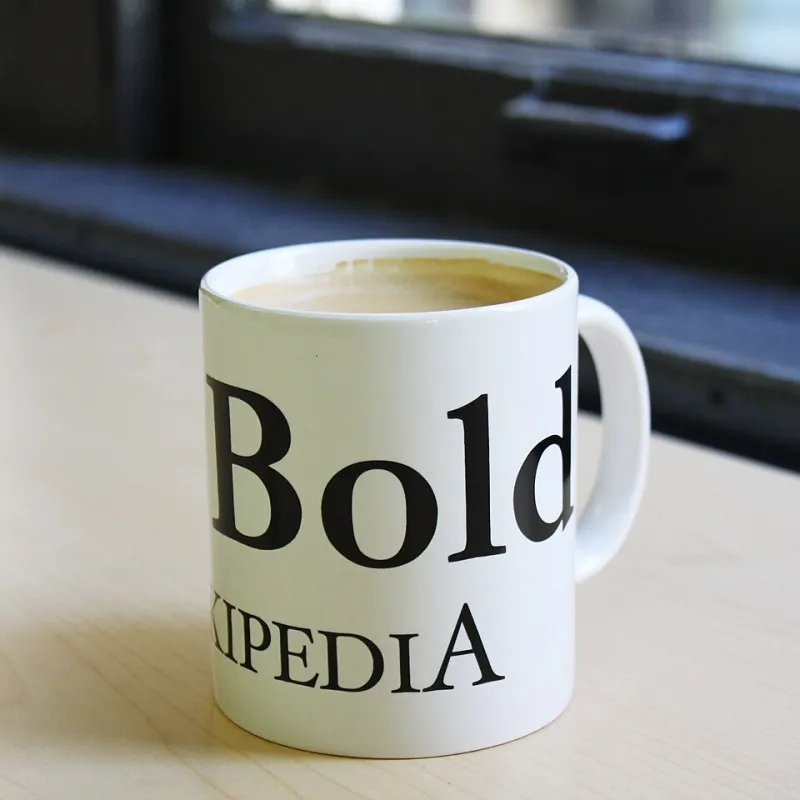
Photo: LiAnna Davis, CC BY-SA 3.0, via Wikimedia Commons
There is a moment, somewhere between the second coffee and the 11am meeting, when the office kitchen stops being a room and becomes a tribunal. The evidence is all there: a mug on the draining board, a label on a pint of milk, a tea bag left in the sink like a small, damp accusation. In Britain, where we would rather endure a thousand silent resentments than say the words 'that's my mug', the shared kitchen is our most passive-aggressive communal space. And like any space where people are forced to coexist without a seating plan, it is also a personal-branding exercise. Your mug is not just crockery. It is a press release.
The Mug You Claim Is a Character Reference
Office mugs fall into a few broad types, each a tiny manifesto. The branded corporate mug — usually from a conference you didn't attend — says: I am professionally adjacent to this industry and I have no strong feelings about aesthetics. The novelty mug with a cartoon cat or a pun about Mondays says: I am approachable, possibly chaos-prone, definitely not a threat. The enormous ceramic bowl that could double as a soup tureen says: I require volume and I am not here to make friends. And then there is the plain white mug from home, the one with a faint crack near the handle, which says: I have been here longer than the last three restructures and I know where the good tea is hidden.
None of these are inherently better. But they are signals, and in a British office, signals are currency. If you are new, your mug choice is the first thing people see before they see your work. A flamboyant mug can be a conversation starter; a deliberately anonymous one can read as self-protective. Neither is wrong. The mistake is thinking the kitchen is neutral. It isn't. It is a small stage, and the props are doing a lot of the talking.
The Tea Round Is a Reputation Audit
The mug is only the opening line. The real character test is the tea round. In Britain, offering to make a round is a social contract wrapped in a hot beverage. Do you remember how everyone takes theirs? Do you ask, or do you assume? Do you use the same spoon for coffee and tea without rinsing, thereby committing a small but memorable act of aggression? Do you return with a tray, or do you wander back one cup at a time, leaving the last person waiting like a forgotten suit at the dry cleaners?
These details accumulate. The person who always remembers that you take one sugar and a splash of oat milk is building a brand of quiet reliability. The person who repeatedly forgets that someone is dairy-free is building a different brand, one that may be accurate or may simply be careless. In 2026, with hybrid teams and half the office in on any given day, these small acts of attention matter more, not less. When you are not physically present all week, the tea round becomes a concentrated version of your professional self: attentive, distracted, generous or transactional.
Draining Board Diplomacy
Then there is the draining board. In a shared kitchen, the draining board is a moral ledger. A neatly stacked mug and a rinsed bowl suggest a person who understands collective consequence. A mug left upside down with a tea bag still inside is a small crime scene. A pan soaking 'to loosen' for three days is a declaration of war by other means. And the communal tea towel — damp, vaguely grey, possibly older than the building — is the closest thing Britain has to a shared reputation. If you leave it wet and crumpled, you are telling everyone that your convenience outranks their comfort.
The practical advice here is not complicated. Rinse what you use. Put it away if there is a cupboard. If there isn't, stack it like you mean it. And if you are the person who brings in a fresh tea towel from home every few weeks, know that you are quietly running for office, and you will probably win.
The Passive-Aggressive Note Is a Brand Crisis
Every office kitchen has a note. Usually it is printed in Comic Sans, taped slightly askew above the kettle, and it says something like 'PLEASE WASH YOUR MUGS — THIS IS A SHARED SPACE'. The note is never about mugs. It is about the breakdown of trust. And the person who writes it — or the person who responds with a counter-note — is sending a signal too: that they have moved from silent resentment to public campaigning.
If you find yourself composing a kitchen note, pause. Consider whether the issue is actually the mug or the fact that no one has restocked the coffee. Consider whether a group chat message with a smiley face might do the same job without the passive-aggressive theatre. And if you are on the receiving end, remember that the note is rarely about you specifically. It is about a system that has failed to accommodate basic human decency. Fix the system — a dishwasher rota, a labelled shelf, a bigger draining board — and the notes will disappear.
How to Send a Better Signal Without Saying a Word
You do not need to overhaul your personality to improve your kitchen brand. Start with the mug. Choose one you actually like, not one that is merely available. If you want to be seen as considerate, keep a spare tea bag in your desk for the person who always forgets theirs. If you want to be seen as organised, label your milk with your name and the date, and actually throw it out when it turns. If you want to be seen as someone who respects shared space, leave the sink cleaner than you found it.
And if you are the person who brings in a new mug every month, cycling through novelty designs like a small ceramic exhibition, know that you are not fooling anyone. You are a person with a rich interior life and a drawer full of puns. That is a brand too. Own it.
The office kitchen is never just a kitchen. It is a focus group, a tribunal and a small, lukewarm mirror. The mug is the message. The tea round is the follow-up. The draining board is the review. And the good news is that you can edit the message every single day, one rinsed cup at a time.