Twenty-One Degrees of Separation: A Field Guide to British Heating Etiquette
By the time the clocks go back, the British living room has already become a small parliament. The motion on the table is simple: is it cold enough for the heating? The debate is rarely about temperature. It is about money, manners and who gets to decide.
We like to pretend central heating is a practical matter. A boiler, some pipes, a dial. But anyone who has sat in a British front room in November knows the truth. The thermostat is a personality test, and most of us are failing it politely.
The Dial Is a Diary Entry
Your heating settings are a confessional. The person who keeps the thermostat at 18°C and wears two jumpers is telling you something about thrift, resilience and possibly a childhood spent in a house where the boiler was treated like a difficult relative. The person who has it at 23°C by mid-October is announcing a different set of values: comfort, abundance, maybe a refusal to be cold ever again.
Neither is simply about warmth. In 2026, with energy bills still doing their familiar seasonal lurch, the way we heat our homes has become a public flex. Not a loud one, obviously. We are British. But a flex all the same. The smart thermostat app on your phone is the new company car. The radiator you have turned off in the spare room is a quiet boast about discipline.
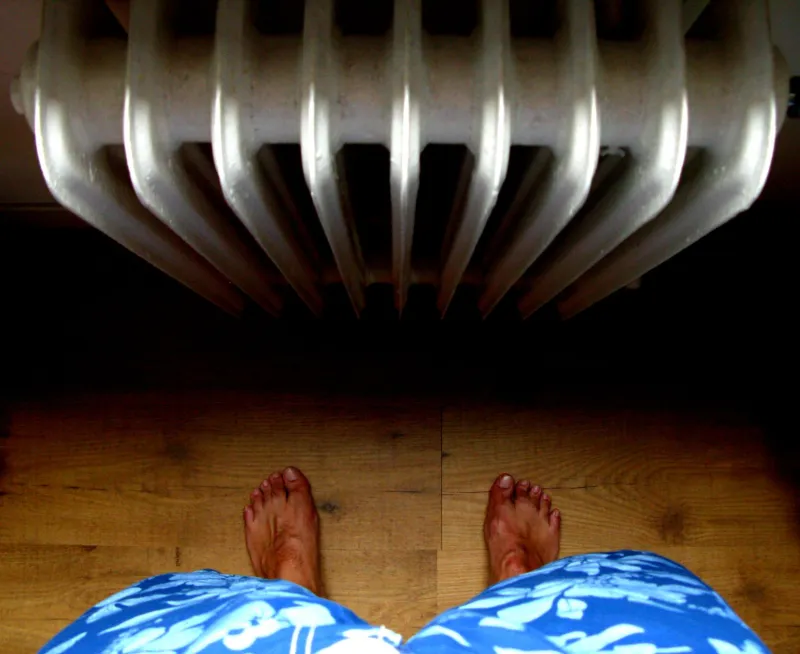
And then there is the humble TRV, the thermostatic radiator valve, which has become the unsung hero of domestic diplomacy. Turning it down to one in the hallway while keeping the bathroom at three is not just efficiency. It is a whole philosophy of life: warmth where it matters, austerity where it does not.
Jumper Politics
Just put a jumper on is the British equivalent of thoughts and prayers. It sounds like practical advice. It is actually a moral position. It says: your discomfort is negotiable, and my heating bill is not.
I have sympathy for the jumper. It is a useful garment and a fine British tradition. But let us be honest about what it is doing in the conversation. When a host says it is not that cold, they are not reading the room. They are reading the meter. And when a guest reaches for their coat rather than ask for the heating to go on, they are performing a very British form of endurance theatre.
This is where personal brand gets interesting. We talk endlessly about authenticity online, but the real test is whether you will admit to being cold in someone else's house. The friend who says, actually, could we put the heating on for twenty minutes, is not needy. They are honest. They are also, in their own way, setting a boundary. The rest of us are just sitting there with blue fingers and a martyr complex.
The Guest's Finger
There is a special circle of social hell reserved for the guest who adjusts the thermostat without asking. You know the type. They arrive, they take off their coat, they glance at the wall, and before the kettle has boiled they have nudged the dial up two degrees like they are tuning a radio.
Is it rude? Yes. Is it also a tiny act of revolution? Also yes. Because the unspoken rule of British hosting is that the host controls the temperature and the guest controls their own suffering. Anyone who breaks that rule is either deeply insensitive or refreshingly direct. I have never decided which.
What I do know is that the thermostat nudge is never just about the nudge. It is about who has permission to ask for what they need. In a country where we apologise to furniture, the person who turns up the heat is practically a radical.
Hosting Is a Heating Strategy
The best hosts understand that heating is hospitality. You do not wait to be asked. You put the heating on before they arrive. You make sure the spare room is not a walk-in fridge. You accept that your energy bill is part of the cost of having people over, alongside the wine and the slightly burnt roast.
This is not about being flashy. It is about reading the room, literally and otherwise. A warm house says: I thought about you before you got here. A cold house says: I thought about my direct debit. Both are valid. Only one is welcoming.
And yet the British instinct is to underplay. We say it is mild when it is freezing. We say we hardly have the heating on when it has been running since September. We treat warmth like a guilty pleasure rather than a basic need. It is a strange kind of national modesty, and it does us no favours.
The Brand Bit
So what does your heating say about you? If you are a 19°C purist with a hot water bottle and a principled stance on fleeces, you are probably the friend who brings their own tea bags on holiday. If you are a 22°C open-door host with a blanket basket and a spare pair of slippers, you are the one people call when they need looking after.
Neither is wrong. But the dial is doing the talking, and it is more revealing than any LinkedIn post. In a winter that already feels long, maybe the most progressive thing we can do is stop pretending we are not cold. Ask for the heating. Offer the blanket. Turn the spare room radiator on before your mother-in-law arrives.
Because the thermostat is not just a machine. It is a small, glowing reminder that we are all trying to look after each other, one degree at a time.