Velvet Hangers, Moral Credit: Britain's Second-Hand Peacocking Has a Price Tag
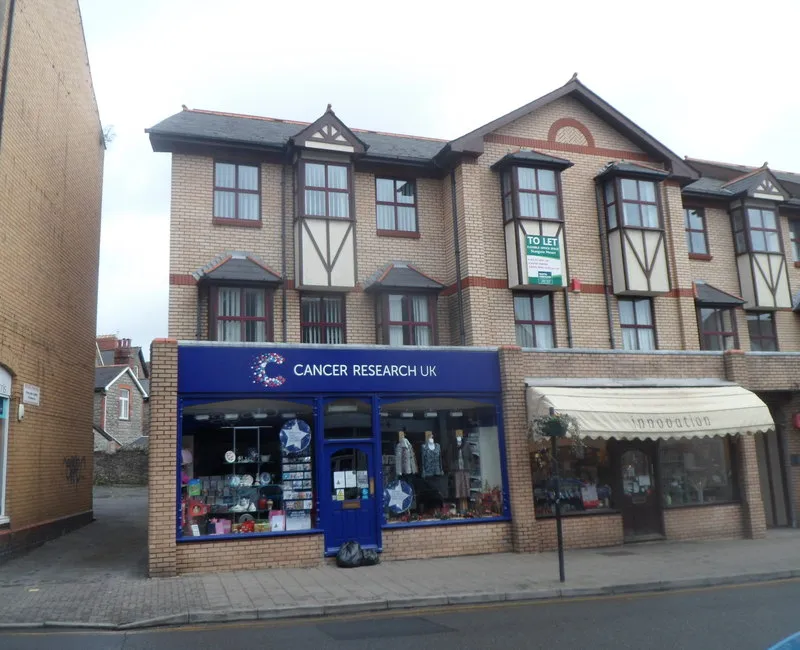
Photo: Jaggery , CC BY-SA 2.0, via Wikimedia Commons
There's a photograph doing the rounds on my feed, and you'll have seen its cousins. A wool coat on a wooden hanger. A £6 label left deliberately in shot. A caption that says 'sourced', as though the garment had been foraged from a hedgerow rather than bought on a Tuesday afternoon in Bromley. The comments coo about how elite the charity shops must be near me. Nobody mentions that the coat is eighties Jaeger and that the person wearing it already owns four.
This is the charity shop flex, and it has gone from a slightly apologetic aside to one of the loudest status symbols in the country.
When second-hand was something you didn't mention
My nan called it 'nearly new'. That phrase did a lot of work. It meant the thing had been worn by someone else and that we were not going to make a fuss about it, because in the Britain I grew up in, buying second-hand was a small admission about money, and admissions of any kind were considered a bit much. Jumble sales happened in church halls and you did not photograph the proceeds.
Now? Vinted and Depop turned the car boot into a marketplace with a tracking number. Charity shops became sourcing trips. The language changed first — 'pre-loved', 'curated', 'archive' — and the behaviour followed. Frugality stopped being a confession and became a personality.
In principle, lovely. Fewer new things made, money into hospice funds and food banks, decent clothes finding second lives. What's not to like? The answer is shorter than the question: it depends who's doing the flexing.
The labour of looking effortless
A curated haul is not effortless. It is a Saturday spent in six shops, a working knowledge of which high street has the good Oxfam, an eye for a label that a stranger's nan would recognise, and a phone steady enough to make a mediocre jumper look like a mood board.
That's the bit the caption never mentions. The flex is really a flex of time, taste and geography — three things distributed with spectacular unevenness across this country. Knowing that the shop near the station is picked over by 10am while the one in the leafy postcode still has cashmere is not a moral quality. It's local knowledge. Which is fine, until we start treating it as virtue.
The ethics bit nobody wants in the caption
Charity shops exist, first and foremost, to raise money for the cause above the door. That's the whole point. So when a shop in a well-off area fills up with vintage Levi's and 1970s ceramics, prices creep upward — rationally, from the charity's point of view, and painfully from everyone else's.
Meanwhile, resellers arrive at opening time, sweep a rail into a basket and list it by lunchtime at four times the ticket. I don't think reselling is evil. I do think we've collectively decided not to notice that the £1 rail now has a queue, and that some of the people in it are shopping there because it's the only clothes shop left on their high street.
And the sustainability claim needs a longer look too. 'Sustainable' is carrying an awful lot of weight in these posts. The same wardrobe can contain a beautiful 1990s blazer and a next-day-delivery order of things that will pill by March. Wearing second-hand alongside fast fashion isn't hypocrisy — it's just what most people's lives actually look like. But we could stop describing a Depop haul as though it were a carbon offset.
Moral credit is not a receipt
Here's my real gripe, and it's not with buying second-hand. Buy everything second-hand. Please. My gripe is with the performance of it, the way a price tag has become a way of saying something about yourself without ever saying it out loud.
Because a flex is always aimed at someone. If the point of the post is the £4, then the post isn't about landfill or sweatshops or the hospice that got your four quid. It's about you being the sort of person who found it. That's a personal brand, not a political position — and Britain has got very good at mistaking one for the other.
The uncomfortable truth is that individual consumption choices, however tasteful, are not a climate strategy. They're a lifestyle. They're a nice lifestyle. They are also not a substitute for the boring structural stuff: repair infrastructure, decent wages in garment work, councils that don't flog every high street unit to a vape shop.
What an honest flex would look like
- Wear it more than you post it. The most sustainable garment is the one with a stain you've stopped noticing.
- Pay the price on the tag. Haggling a hospice volunteer over 50p is not a personality.
- Leave something on the rail. Someone else's Tuesday is not improved by you clearing the rail for a haul video.
- Retire the word 'sourced'. You bought it. In a shop. It's allowed to be ordinary.
- Mend the thing. Learn to sew on a button, or find the repair café that opened in the library annexe. It exists. It's cheaper than a new coat.
- Donate as loudly as you buy — or, better, don't make noise about either.
The charity shop flex isn't going anywhere, and honestly I don't want it to. Cheap clothes, longer lives, money to good causes: that's a decent country to live in. But let's be honest about what we're doing when we point the camera at the tag. The best second-hand purchase I've ever made is one nobody has ever asked about, and I've never once mentioned where it came from.