The Quiet Flex: Why British Self-Promotion Still Whispers
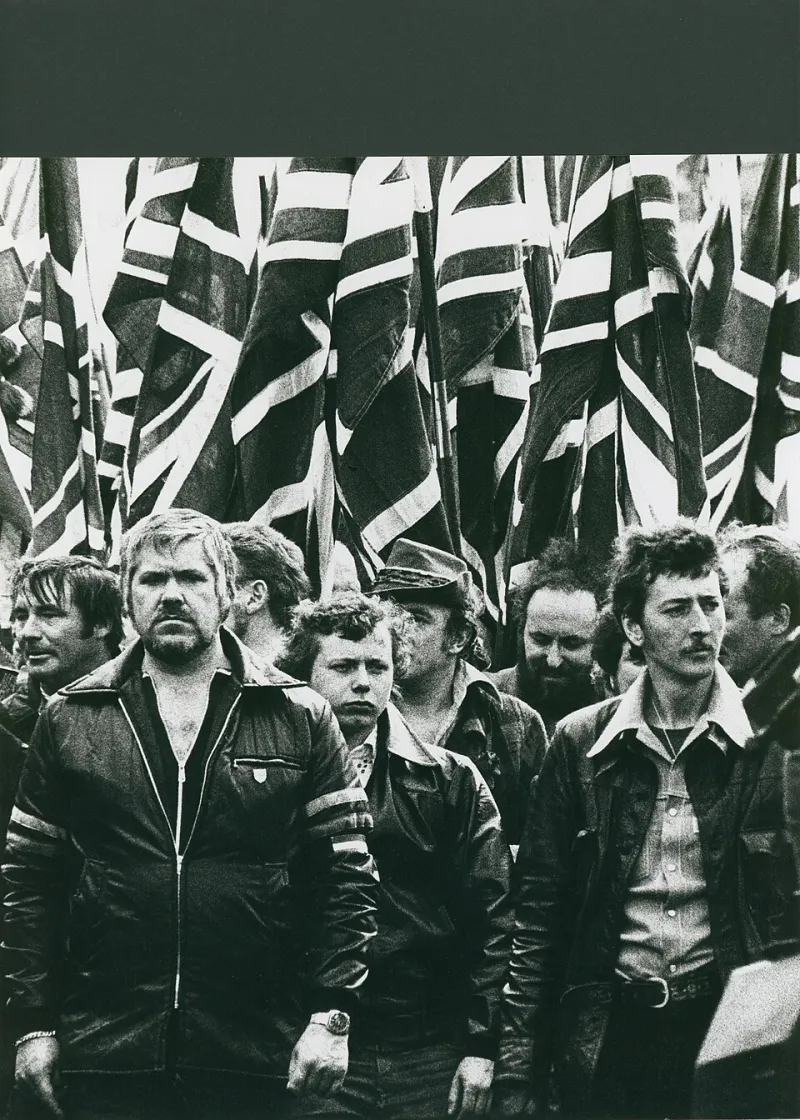
Photo: Frank Duffin of Belfast, Northern Ireland. Borne 1944 Ballymena, N. Ireland. Deceased 2015 Marseillan, France. A freelance photographer in London & Dublin he spent his latter working years as a lecturer in photography and media at the Dublin Instit
The British LinkedIn feed is a strange place. It is a pub where everyone is standing on a chair. Someone is announcing a “personal update” that is really a job. Someone else has learned a lesson in a car park and would like to share it with 4,000 strangers. A third person is “thrilled” in a way that suggests they have never been thrilled before and are still getting used to the sensation.
This is not an American import we have simply accepted. We have localised it. The British thought-leader voice has its own grammar: the humble-brag, the vulnerability sandwich, the lesson-learned post, the “I almost didn’t share this” confession that arrives, suspiciously, with a professional headshot attached. It is a national costume, and an awful lot of people are wearing it badly.
The feed ate the CV
There was a time when a British career was a CV: two pages, sensible font, a lie about Excel. Now it is a content feed. The shift matters because it has changed what self-promotion feels like. The old model was “here is my experience”. The new model is “here is my journey, my mindset, my morning routine and my relationship with failure”. Work has become a story we are expected to tell continuously, in public, with hashtags.
That is a lot to ask of a country that apologises to furniture. We are a nation that says “not bad” when we mean “extraordinary” and “with respect” when we mean “absolutely not”. We do not naturally warm to the hard sell. We warm to the person who is good at the thing, knows they are good at it, and does not need to make a documentary about it.
The performance of self-promotion
I asked a handful of British freelancers and founders how the performance of self-promotion actually feels. The answers were not exactly a ringing endorsement of the visibility economy.
“I once posted a ‘lessons learned’ thread and three people asked if I was okay,” says Priya, a freelance UX consultant in Manchester. “I was trying to be generous. It read like a cry for help.”
Tom, who runs a small design studio in Leeds, puts it more bluntly. “The algorithm rewards volume. The British client rewards the sense that you are not desperate. Those two things are not always compatible.”
Aisha, a copywriter in London, says her best month of enquiries came after she stopped posting for six weeks and simply did good work. “It was deeply annoying,” she says. “I had been told that if I wasn’t visible, I didn’t exist. It turns out I existed just fine. I was just quieter.”
Callum, a brand strategist in Glasgow, describes understatement as a filter. “If you shout, you attract people who like shouting. If you are dry and specific and slightly hard to impress, you attract people who are also dry and specific and slightly hard to impress. That is a better room to be in.”
What the quiet ones know
Reticence is not invisibility. Wit is a brand. A well-timed silence is punctuation. The British market has a finely tuned bullshit detector, and it goes off whenever someone describes themselves as a “thought leader” without irony. If you have to call yourself a thought leader, the thought is probably still in beta.
The quiet flex is not doing nothing. It is doing the work, then letting the work do a little of the talking. It is a case study instead of a manifesto. A referral instead of a humble-brag. A sentence that lands instead of a paragraph that performs. It is the confidence to be specific without being loud, and the good manners not to make every project sound like a turning point in human history.
There is also a commercial argument here. Hustle culture is exhausting to watch and exhausting to buy from. The British personal brand still refuses to shout because shouting reads as insecurity. Understatement reads as experience. A person who can be funny about their own achievements is usually better company than a person who has turned their achievements into a LinkedIn carousel.
A well-timed silence is a strategy
For anyone with their own name above the door, the practical version is simple. Post less, but say something specific. Collect proof from other people instead of writing testimonials to yourself. Keep a page of finished work that does not require a motivational caption. Let your wit do the work that a sales pitch cannot. And accept that visibility is not the same as value; sometimes the most confident move is to shut up and let the room come to you.
None of this means disappearing. It means refusing the false choice between relentless self-promotion and total obscurity. The British personal brand can be warm, sharp and quietly ambitious. It can be understated without being underwhelming. It can whisper, and still be heard.
In a feed full of people standing on chairs, the person sitting down with a decent pint and a good story is the one you actually want to talk to.