Please Hold: The Out-of-Office Is Britain’s Most Honest Status Symbol
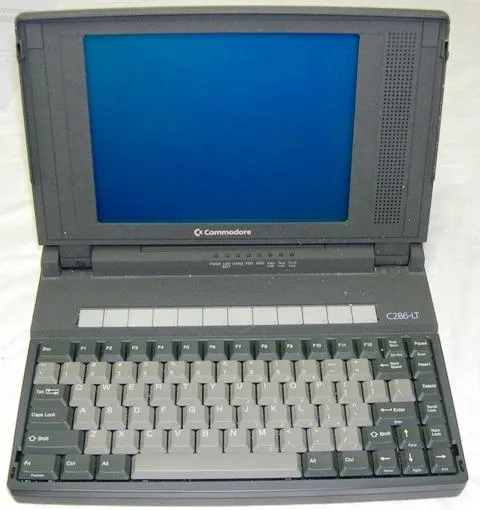
Photo: Museum of Transport and Technology, CC BY 4.0, via Wikimedia Commons
There are few places in British professional life where we are more accidentally revealing than the out-of-office message. LinkedIn gives us time to rehearse. X, Instagram, even the humble work newsletter — all edited, polished, posted with intent. The OOO is different. It arrives when we are already half out the door, one hand on a suitcase, the other on a laptop that has definitely not been packed. And in that small rectangle of text, we tell the truth.
The digital front garden
Think of your auto-reply as the front garden of your working life: a tiny bordered space that tells visitors whether to knock, wait, or quietly admire from a distance. In Britain, front gardens are never just plants. They are signals. A neat hedge says keep out gently. A wonky gate says we are friendly but not available. An OOO does the same job in fewer words.
The apologetic version — “I am currently out of the office with limited access to email” — is the equivalent of a hand-wringing note pinned to the door. Translation: I am probably on a train with four bars of signal, but I would rather not commit. The “for urgent matters, please contact…” line is a different beast altogether. It is helpfulness with a moat. It says: I have cover. I have a system. I have somebody who will absorb the thing you are about to call urgent before it reaches me.
Then there is the unapologetic note: “I am on annual leave until Monday 16 November and will not be checking email. I will reply when I am back.” No hedging. No “limited access”. No apology for having a body that needs rest. It is, frankly, the most radical thing many British professionals will write all month.
What your OOO is really saying
Auto-replies are status symbols in disguise. Not in the obvious sense of a job title, but in what they reveal about cover, confidence and boundaries. If your message says “please contact my colleague” you are telling the world that your absence has been planned for. If it says “I will be checking emails intermittently” you are telling the world that you are not entirely sure your absence is allowed. If it says “I am away and will not be checking email” you are telling the world that you have decided your time belongs to you. That last one is not a policy. It is a personality.
This is not a moral hierarchy. Plenty of people — freelancers, carers, shift workers, anyone on a zero-hours contract — cannot switch off so cleanly. An OOO can be a luxury item. But that is exactly why it is revealing: it shows who has cover, who has permission, and who is expected to remain vaguely available on the beach.
The passive-aggressive line
Let’s be honest about the “for urgent matters” clause. In the wrong hands it becomes a tiny threat: everything is urgent, and none of it is mine. In the right hands it is a courtesy. The difference is specificity. “For urgent matters, please contact Priya in the press office” is useful. “For urgent matters, please use your judgement” is a riddle. “For urgent matters, contact me on my mobile” is not an out-of-office at all; it is an open door with a welcome mat that says please exhaust me.
Writing one that sounds human
Here is a short guide, not a template. Templates are how we ended up with “I am currently out of the office” in a country that has been using email for decades.
Say when you are back. A date is kind. A date and time is kinder. “Back on Tuesday 10 November” beats “back soon” every time.
Name one route for genuine urgency. Not three. Not “feel free to escalate”. One person, one reason. If there is no genuine urgency, say so gently: “I will respond on my return.”
Drop the pre-apology. “Sorry for the delay” before the delay has happened is a very British tic. You are not late. You are away.
Match the tone to the job. A hospital consultant and a freelance illustrator do not need the same auto-reply. One needs calm precision. The other can probably get away with “I’m in Cornwall with a sketchbook and poor signal.”
Do not overshare. “I am away for personal reasons” is a complete sentence. You do not owe the internet a medical bulletin.
Read it aloud. If it sounds like a council parking notice, rewrite it. If it sounds like you, keep it.
The smallest manifesto
In 2026, we are endlessly told that personal brand is a performance: the carousel post, the newsletter, the carefully lit talking head. But some of the most honest branding happens in the margins. The OOO is a boundary you can set in thirty seconds. It is also a courtesy. It tells people what to expect, where to go, and whether to wait.
A good auto-reply does not need to be clever. It needs to be clear. It should sound like a person who has left the building, not a policy that has replaced them. And if it quietly says that rest is allowed, cover exists, and the world will keep turning while you eat a sandwich somewhere other than your desk — so much the better.
So before you hit save, read your message twice. It is not just an admin chore. It is the smallest manifesto you will write this week: a tiny, British, out-of-office declaration that your time is yours. Then close the laptop. The auto-reply has got it from here.