Call Me By Your Shopfloor Name: Britain’s Nickname Hierarchy and the Brand You Didn’t Build
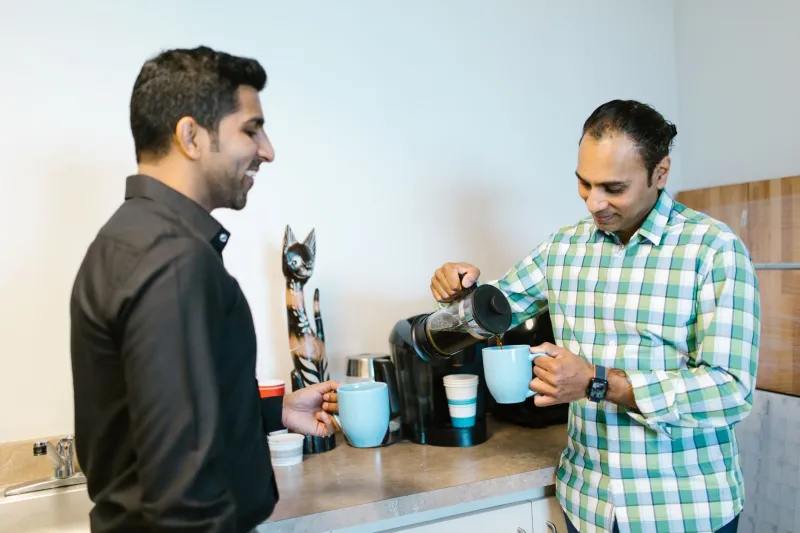
At 8:42 on a Tuesday, the kettle clicks off in a British office kitchen and a small act of nation-building takes place. Someone says, ‘Morning, Col,’ and Colin from accounts becomes a shorter, warmer version of himself. Across the room, a new starter is still ‘Sophie’ — full name, full stop. Nobody has decided anything officially. That is precisely how it works here. Britain runs a parallel naming system alongside the one printed on your contract, and it is far more revealing than your job title, your email signature or that LinkedIn endorsement from a man called Gavin who once saw you present.
The diminutive is not a promotion
A nickname is not a badge you earn for good behaviour, although it can feel like one. It is a small piece of social property. When a team starts calling David ‘Dave’, they are not just saving a syllable; they are filing him. When Dave becomes ‘Davesy’, he has been absorbed. When he is still ‘David’ after three years while everyone else is on surname terms, that is not necessarily disrespect. It might be respect, or distance, or the fact that he is the one who signs off annual leave. Full names can be a moat.
This is why the nickname audit is so useful. Your personal brand is not the story you tell in a bio. It is what someone calls you when they need something from the printer. It is the name that arrives before you in a group chat. It is the version of you that exists in other people’s mouths when you are not in the room.
Who gets ‘mate’ and who gets a name
‘Mate’ is the great British contactless payment of affection. It is quick, convenient and requires no PIN. It can be genuinely warm. It can also be a way of not learning someone’s name for six months. If you are the only person on your team still being called ‘mate’ after the Christmas do, that is data. Not a crisis, necessarily, but data.
Regional endearments complicate things further. ‘Love’, ‘pet’, ‘duck’, ‘hen’ — these can be the softest sounds in the language, or they can be a small demotion. Context is everything. A bus driver calling you ‘pet’ is one thing. A colleague calling you ‘pet’ while you are trying to chair a meeting is another. The unwritten rules are not innocent; they are just unwritten.
The family kitchen clause
The most powerful nicknames are the ones you never chose. In family kitchens, names become time capsules. You are forty-two, you run a department, you have a mortgage and a strong opinion about bin day, and your aunt still calls you ‘Pip’. That nickname is not just a word. It is a whole era of your life, preserved in aspic and served with a cup of tea.
This is where the personal-brand conversation gets interesting. The internet tells you to ‘define your narrative’. Your family will quietly remind you that your narrative was defined in 1994 by a cousin who thought your ears looked like a particular kind of pastry. You can build a website. You cannot easily rename the kitchen.
A field guide to the unwritten rules
-
You cannot assign your own nickname. If you introduce yourself as ‘Titch’, Britain will hear a plea. If you say ‘everyone calls me Big Al’, everyone will immediately stop.
-
Shortening is a privilege with a hierarchy. The more senior you are, the more likely people use your full name or a title. The more junior you are, the more likely you are to be ‘mate’. This is not a law, but it is a pattern, and patterns are where power hides.
-
Role nicknames are not personality nicknames. ‘Tech Dave’ and ‘Marketing Sarah’ are wayfinding systems, not character assessments. Do not mistake the label on the cupboard for the person inside it.
-
One intimate version per group is usually enough. If two people start using the same deeply personal diminutive, it stops being a nickname and becomes a brand. The second person is not being affectionate; they are doing a takeover.
-
No name at all is still a message. The colleague who begins every email with ‘Hi’ and no name is not neutral. They have made a choice, even if the choice is avoidance.
-
Never test-drive a nickname on yourself. This is the equivalent of laughing at your own joke in a meeting. It can be done, but the room will remember.
What your audit actually reveals
Open your phone. Look at the first line of your last ten messages. Who shortens your name? Who uses your full name? Who uses ‘mate’? Who uses no name at all? Who uses the name only your family uses, and how did they find out? That is your reputation, in draft.
The results will not be fair. They will be shaped by class, gender, region, race, seniority and the fact that Britain has a long and complicated relationship with familiarity. A nickname can be a door being held open. It can also be a hand on your shoulder that you did not ask for. The progressive move is not to ban nicknames; it is to notice who gets one, who gives one, and who never gets the courtesy of being called what they asked to be called.
The brand you didn’t build
You can spend hours on a personal-brand workshop, choosing fonts and adjectives. Or you can go to the kettle and listen. The name that follows you into the kitchen is the one you actually have. If you want to change it, start with behaviour, not a badge. Be the person who remembers names. Be the person who asks before shortening. Be the person who says, ‘Actually, I prefer Sophie,’ without turning it into a TED Talk.
And if you are the one handing out the names, look around. Who is still ‘mate’ after a year? Who is always a full name and a full stop? Who has never been given the small, stupid, affectionate shorthand that turns a colleague into a person? That is your audit too. Two sugars and a nickname is not a slogan. It is a small system of belonging. Use it carefully.